Traditional tattoos have a unique way of sticking around. While trends in body art come and go, the bold outlines, rich colors, and iconic imagery of traditional tattoos continue to draw both newcomers and seasoned collectors. If you're on the hunt for a tattoo style that exudes confidence, is easy to read, and ages gracefully, traditional designs should be on your radar. This guide will dive into why traditional tattoos remain a classic, what makes them visually striking, and how to pick the right design, artist, and aftercare strategy for a tattoo that lasts.
At San Diego Tattoo Company, we find that this style resonates with clients because it's both expressive and reliable. Whether it's a flash-inspired piece, a custom sleeve, or a small symbol with deep meaning, traditional art offers clarity without losing personality. If you're comparing styles, check out our traditional tattoo service along with our color tattoos and black and gray options to see how different approaches can affect the final look.
Traditional tattooing is a blend of art and craft. It's rooted in history, yet it evolves with modern techniques, improved pigments, and a better understanding of how the skin behaves. This is why it's one of the most respected styles in tattoo culture. And because tattoos involve your skin, health guidelines matter; the U.S. Food and Drug Administration offers useful advice on tattoo safety and pigments at FDA tattoo and permanent makeup guidance.
What Makes Traditional Tattoos Instantly Recognizable
Bold outlines that hold their shape
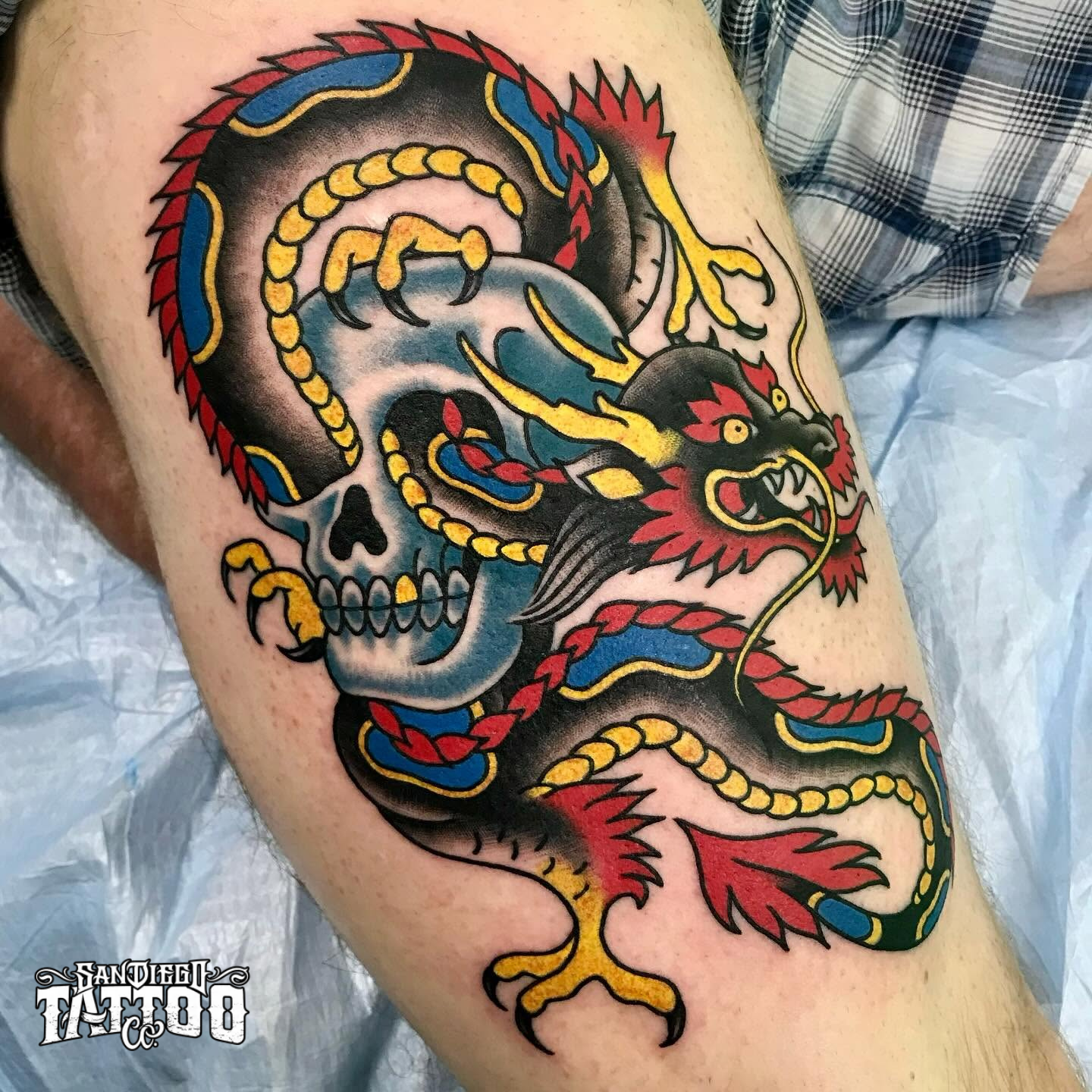
The standout feature of traditional tattooing is its strong outlines. These lines do more than just define the image; they create a framework that keeps the tattoo clear over time. In a world where intricate details can blur, a bold outline acts like a frame that holds the composition together.
This is why traditional designs often look good even from afar. A rose, dagger, eagle, panther, or anchor doesn’t need tiny gradients to convey meaning. Instead, the design uses shape, contrast, and solid line work to make a quick impact. That ease of reading is a big reason the style has stayed popular for so long.
Rich color that creates instant impact
Traditional tattoos are famous for their vivid reds, deep greens, bright yellows, and saturated blues. These colors aren’t muted or washed out; they’re meant to stand out. This strong visual language gives traditional tattoos their unmistakable energy.
Bold color pairs beautifully with the style’s simple shading. Instead of complex gradients, traditional tattoos often use clean blocks of color to create shape and movement. This results in a design that feels bold and timeless rather than overly detailed or trendy.
Classic imagery with universal meaning
Traditional tattoos endure because their imagery feels universal. Roses might symbolize love or loss, daggers can mean survival, swallows might represent travel or loyalty, and skulls can stand for mortality or rebellion. These symbols are easy to understand at a glance but rich enough to carry personal meaning.
This mix of clarity and symbolism makes traditional tattoos incredibly versatile. You can choose a classic flash design or get a custom piece that blends familiar motifs with your personal story. For those interested in a more decorative style, our fantasy and illustrative art page shows how symbolism can expand into more elaborate storytelling.
Why Traditional Tattoos Age Better Than Many Trend-Driven Styles
Skin changes over time, and design choices matter
One big advantage of traditional tattooing is how well it adjusts to natural skin aging. As tattoos age, fine details might soften, and thin lines can spread a bit. Traditional designs are made with this in mind. Their bold structures remain clear even after years of normal skin changes.
This doesn’t mean every traditional tattoo ages perfectly without care. Sun exposure, placement, and aftercare all play a role. But compared to styles that rely heavily on tiny details, traditional work often keeps its visual impact better. For general skin protection tips, the Skin Cancer Foundation offers helpful info about sun safety, which is crucial for tattoo maintenance.
Color saturation supports long-term visibility
When traditional tattoos are packed correctly and cared for properly, the color remains strong for years. Saturated pigments and clear contrast help the design stay visible as the skin naturally ages. This is especially important in high-motion areas like forearms, upper arms, calves, and thighs, where tattoos are often seen and need to maintain their visual strength.
Many people might not realize that a tattoo’s long-term success starts with planning. The size of the design, its placement on the body, and the amount of negative space all affect aging. A well-planned traditional tattoo shouldn’t be overloaded with tiny details; it should be designed to look strong in real life, both now and later.
Less fuss, more longevity
Traditional tattoos are often easier to maintain because the style ages naturally. Rather than trying to preserve ultra-fine realism or delicate linework, the tattoo develops character over time. Slight softening can even enhance the old-school feel, adding depth and authenticity.
This makes traditional work a smart choice for those who want body art with a long life. It’s a style that embraces aging as part of the story, not a flaw. For many, that timeless quality is what makes the tattoo more meaningful.
The Cultural Roots Behind Traditional Tattooing
A style shaped by sailors, soldiers, and travelers
Traditional tattooing has deep roots in Western history, especially through maritime culture and military influence. Early designs were often worn by sailors and travelers who wanted symbols of protection, memory, and identity. Anchors, swallows, ships, compasses, and hearts became part of the visual language because they were powerful, portable, and easy to recognize.
This historical foundation gives traditional tattoos a sense of authenticity. Even when the imagery is updated for modern clients, the style carries echoes of those who popularized it. It’s an art form with lineage, and many people are drawn to that sense of continuity.
Flash art and the rise of tattoo culture
Traditional tattooing also played a role in shaping the modern flash wall concept. Flash sheets gave clients an easy way to choose from ready-made designs, making tattooing more accessible and efficient. These designs were built with strong lines, balanced shapes, and clear symbolism, which helped them translate beautifully onto skin.
Today, flash is still part of tattoo culture, but artists also create custom versions that keep the classic look while fitting the client’s body and story. This blend of history and customization is why traditional tattooing continues to appeal across generations.
Respecting heritage while making it personal
Traditional tattooing isn’t just a visual trend. It’s part of a larger artistic heritage with regional influences, cultural symbolism, and a long shared history. People who appreciate the style often connect with that heritage, even if they’re choosing a design for personal reasons.
When thoughtfully approached, traditional tattoos can feel rooted and personal. The best pieces don’t just copy old flash art; they honor the style’s structure while reflecting the wearer’s identity. This balance keeps the look alive instead of stuck in the past.
How to Choose the Right Traditional Tattoo Design
Start with meaning, not just aesthetics
The best tattoos usually start with a reason. Traditional imagery works well when the symbol means something to the wearer—resilience, love, loss, freedom, protection, or transformation. A meaningful concept is easier to refine into a lasting design.
If you’re not sure where to start, think about the message you want your tattoo to convey. Do you want it bold and visible, or small and personal? A single symbol or a composition that tells a larger story? A skilled artist can help narrow these choices into a design that fits your body and goals.
Choose motifs that suit the style
Traditional tattooing isn’t the best fit for every idea. While many designs can be adapted, the style works best with imagery that has a clear silhouette and strong contrast. Flowers, animals, daggers, hearts, banners, sacred symbols, and nautical pieces are all natural fits.
If you want something more delicate, you might explore a style like fine line tattoos. But if you love clarity, impact, and high visual appeal, traditional is hard to beat. It rewards confidence in the concept and discipline in execution.
Plan placement with longevity in mind
Placement matters for every tattoo, but especially for traditional work. Areas with stable skin and good visibility often showcase the style best. Forearms, upper arms, calves, thighs, and upper backs are popular choices because they offer enough room for bold design and long-term readability.
If you’re still deciding on placement, it helps to read a dedicated guide before committing. Our related post, Expert Tattoo Placement Guide: Why the Right Spot Matters for Your Design, explains how body location affects design flow, comfort, and how the final piece ages.
Why Traditional Work Continues to Inspire Modern Tattoo Clients
It is versatile without losing identity
Some styles gain popularity because they can mimic everything. Traditional tattooing stays popular because it does one thing really well. It presents a clear, bold, honest image that stands on its own. That consistency gives it identity, and identity is a big part of style longevity.
At the same time, the style is flexible enough to allow personal expression. Artists can adjust color palettes, alter compositions, add banners, mix motifs, or create custom flow for the body. The result still feels like traditional tattooing, but with a personal touch.
It photographs well and looks strong in real life
Traditional tattoos tend to look great in photos, but they’re designed for real-world viewing. The bold shapes and contrast don’t depend on perfect lighting or close inspection. That makes them ideal for people who want a tattoo that’s noticeable, flattering, and clear in everyday settings.
In social media culture, a tattoo can be judged on the screen first. Traditional work shines there, but it also shines in motion, under natural light, and across different skin tones. That durability of impression is part of its modern appeal.
It feels timeless instead of trendy
Trends can be exciting, but many people want tattoos that still feel right ten or twenty years later. Traditional tattoos offer that reassurance because they’re already proven by time. You’re not gambling on a design language that may look dated quickly; you’re choosing a format that has already lasted through generations.
For those who want timeless confidence, that matters. A classic rose or panther can still feel personal because the meaning comes from the wearer, not from a passing trend cycle. The style’s visual grammar stays stable while the story inside it remains unique.
What to Expect During the Tattoo Process
Consultation and design planning
A successful traditional tattoo begins with a thoughtful consultation. During this step, the artist learns about your idea, reviews placement, and suggests ways to strengthen the composition. Because the style depends on balance and readability, the design often improves when the artist can scale it properly and simplify weak spots.
This is also when your artist may discuss color saturation, line weight, and skin placement. A strong traditional tattoo should feel intentional from every angle. If you are interested in exploring multiple styles before deciding, our realism tattoos and stippling and dotwork pages can help you compare how different styles create contrast and texture.
Application and healing
Traditional tattoos are typically applied with deliberate line work and solid color packing. Because the style is built on clarity, the artist will pay close attention to consistency and placement. The process may feel straightforward, but it requires precision and control at every stage.
Aftercare is just as important as the tattoo itself. Following your artist’s instructions helps preserve line crispness and color quality as the skin heals. Clean washing, gentle moisturizing, and avoiding sun and soaking are common recommendations, but always follow the specific instructions given by your studio.
Long-term care and touch-ups
Even the best tattoos benefit from good long-term habits. Keeping the skin moisturized, using sunscreen, and avoiding unnecessary trauma to the area can help preserve the design. If a tattoo needs a touch-up years later, traditional pieces are often relatively easy to refresh because the structure is already solid.
This practical advantage is another reason many collectors love the style. They know the tattoo can stay strong without requiring constant correction. It becomes a reliable part of their visual identity rather than a fragile experiment.
Traditional Tattoos vs. Other Popular Styles
Compared with realism
Realism can be breathtaking, especially for portraits, animals, and highly detailed imagery. But realism often depends on fine shading, subtle gradients, and careful skin preservation over time. Traditional tattoos take a different path. They prioritize bold readability over photographic detail, which gives them a different kind of strength.
If your goal is a tattoo that communicates instantly and stays visually stable, traditional may be the better choice. If you want a lifelike portrait or highly dimensional image, realism might be more suitable. Both are beautiful, but they serve different creative goals.
Compared with fine line work
Fine line tattoos offer delicacy and minimalism, and they have become very popular. However, the more delicate the line, the more important it is to consider aging and placement. Traditional tattoos, by design, have more built-in resilience.
This does not make one style better than the other in every situation. It simply means traditional tattooing is especially strong when you want a confident, durable look. It also pairs well with clients who like the clarity of classic imagery but still want a modern custom experience.
Compared with color realism and illustrative work
Illustrative and color realism tattoos can create rich visual worlds, and they are excellent for expressive storytelling. Still, traditional work has a particular advantage: it delivers impact quickly. The message is immediate, the design is legible, and the composition is easy to appreciate at different distances.
For many clients, that balance of artistry and directness is exactly what makes traditional tattoos so appealing. They do not need to be explained in order to be understood, which is a powerful trait in body art.
Frequently Asked Questions About Traditional Tattoos
Do traditional tattoos hurt more than other styles?
Pain varies by placement, size, and personal tolerance more than by style alone. Traditional tattoos can involve bold line work and solid color packing, which may create a different sensation than very light or detailed work. However, the discomfort is usually manageable, and a skilled artist will work efficiently.
Will traditional tattoos fade faster because they use bright colors?
Not necessarily. In fact, bright, saturated color is one reason traditional tattoos are so durable visually. Fading usually depends more on sun exposure, aftercare, placement, and skin type than on color alone. Good maintenance makes a major difference.
Can traditional tattoos be customized?
Absolutely. Traditional tattooing has a strong visual framework, but it is highly customizable. Artists can adjust color choices, composition, symbolism, and placement while preserving the style’s classic structure. This is one of the reasons the look continues to feel fresh.
What should I bring to my consultation?
Bring reference images, but also bring an open mind. A few strong references can help your artist understand the mood and direction you want, even if the final tattoo is completely custom. It is also helpful to think about size, placement, and whether you want color or black ink.
Conclusion: Why Traditional Tattoos Still Matter
A style that has earned its place
Traditional tattoos never go out of style because they are built on strong fundamentals. Bold lines, vibrant colors, and clear imagery create tattoos that are easy to read, easy to love, and often easier to maintain over time. The style has history, but it is not stuck in the past.
Instead, traditional tattooing continues to evolve through modern artists who respect its roots while bringing new ideas into the craft. That is why it remains one of the most trusted and recognizable styles in tattooing today.
Ready to bring your idea to life?
If you are looking for a tattoo that feels timeless, powerful, and true to the art form, traditional work is an excellent place to start. At San Diego Tattoo Company, our artists can help you create a piece that fits your story, your body, and your long-term vision. Whether you want a classic symbol or a custom design with a traditional foundation, we are here to help.
Explore our services, review your favorite styles, and start planning a tattoo that will still look strong years from now. For more options, you can also browse black and gray tattoos or professional body piercing if you are considering multiple ways to express your style. When you are ready, contact us at (619) 824-5226 or visit us at 1026 Garnet Ave, San Diego, CA 92109 to discuss your next tattoo.